Global
Pax Agricultura · Est. 2026 · America's 250th
Gardens
for
Food Security

Special Event
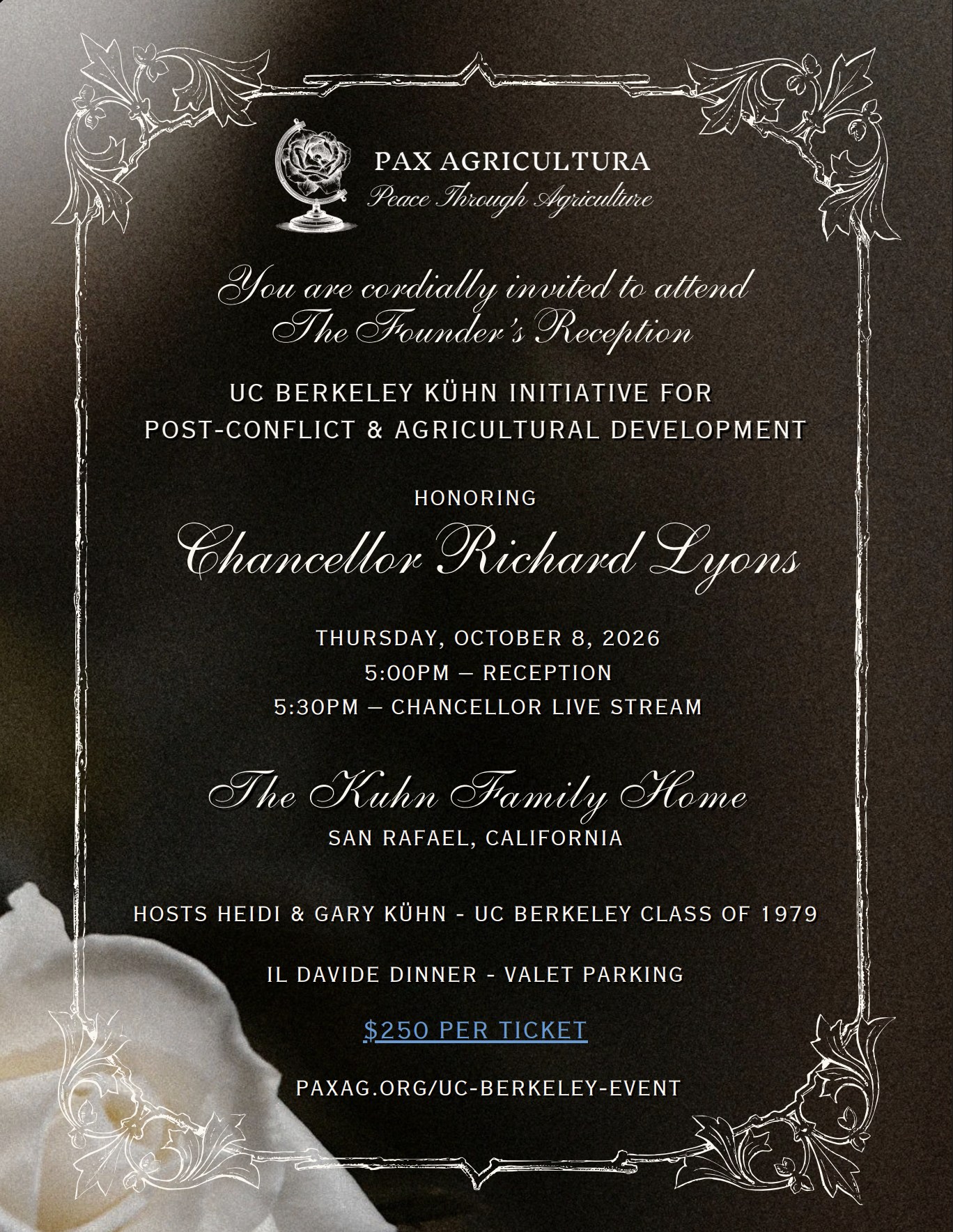
The UC Berkeley CMES is proud to announce the Kühn Initiative for Post-Conflict and Agricultural Development, a collaboration with UC Berkeley graduates Gary and Heidi Kühn, Class of 1979, and co-founders of Roots of Peace, which has transformed war-torn lands into productive farmland benefiting millions of farmers and traders worldwide.
Peace Through Agriculture:
A Global Call to Action
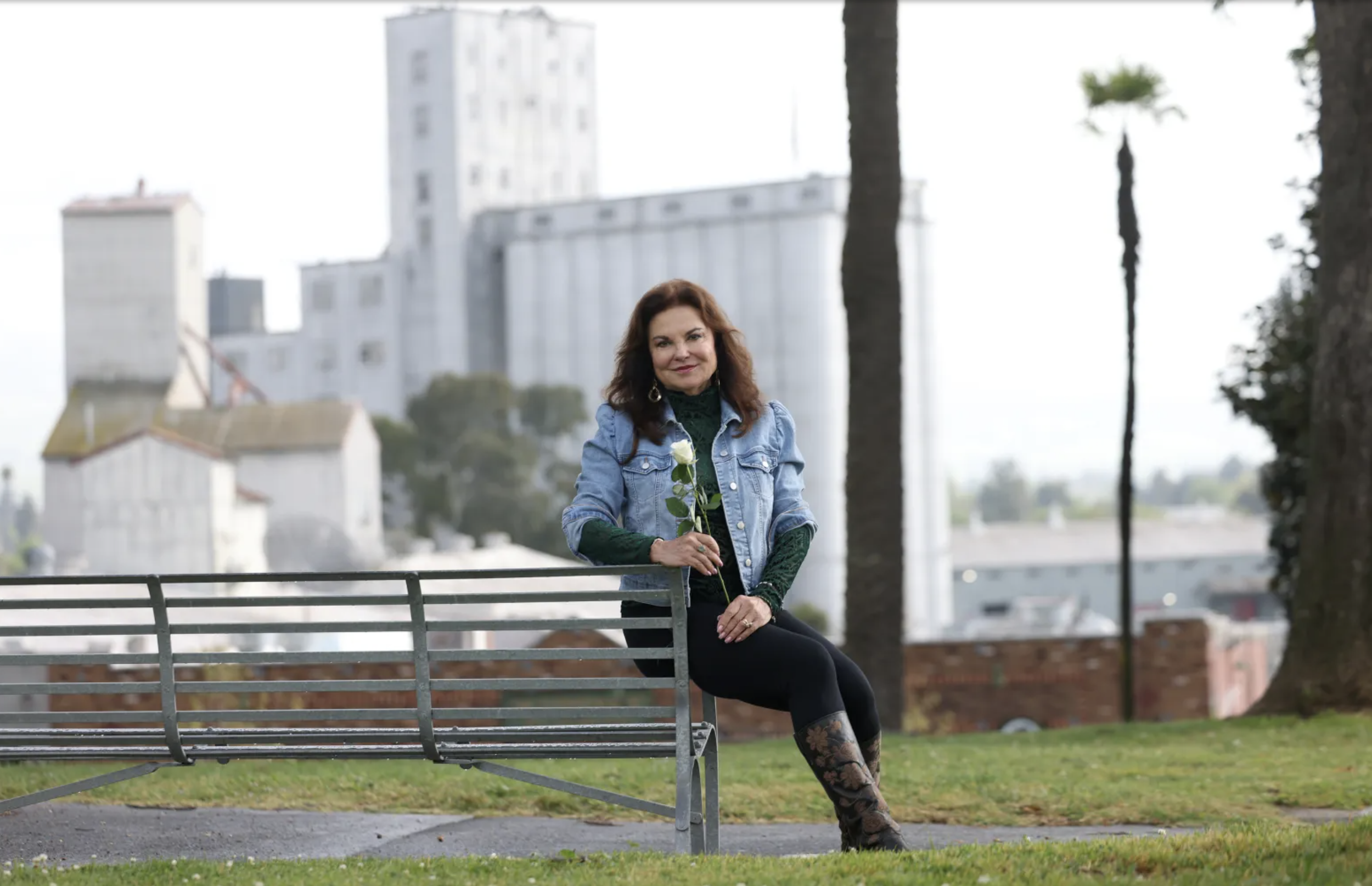
From the towering redwoods of Muir Woods, in Marin County, California — where early United Nations delegates once gathered beneath ancient canopies to imagine a more peaceful world — PAX AGRICULTURA honors the belief that soil and soul are deeply intertwined. The white rose, a symbol of the land's enduring bounty, reminds us that agriculture has long been humanity's most peaceful offering to the world.
Heidi Kuhn, a fifth-generation steward of this land, has carried that same spirit across continents and conflict zones. As World Food Prize Laureate and Founder of Roots of Peace — recipient of both the Mother Teresa Award for Social Justice, Gandhi Global Family Seva Award, Skoll Award for Social Entrepreneurship — her vision to plant Global Gardens for Food Security has demonstrated what PAX AGRICULTURA now affirms as a universal principle: by healing the earth, we can also heal humanity.
PAX AGRICULTURA — Latin for Peace Through Agriculture — calls the global community back to timeless principles of stewardship, cooperation, and care for the earth. More than a name, it is a movement. In a world where conflicts over land, resources, and survival are escalating, agriculture offers a universal pathway to reconciliation, stability, and hope. By empowering communities to grow their own food, restore degraded land, and work in harmony with nature, we plant not only seeds of sustenance — but seeds of peace.
IN THE NEWS
-
![]()
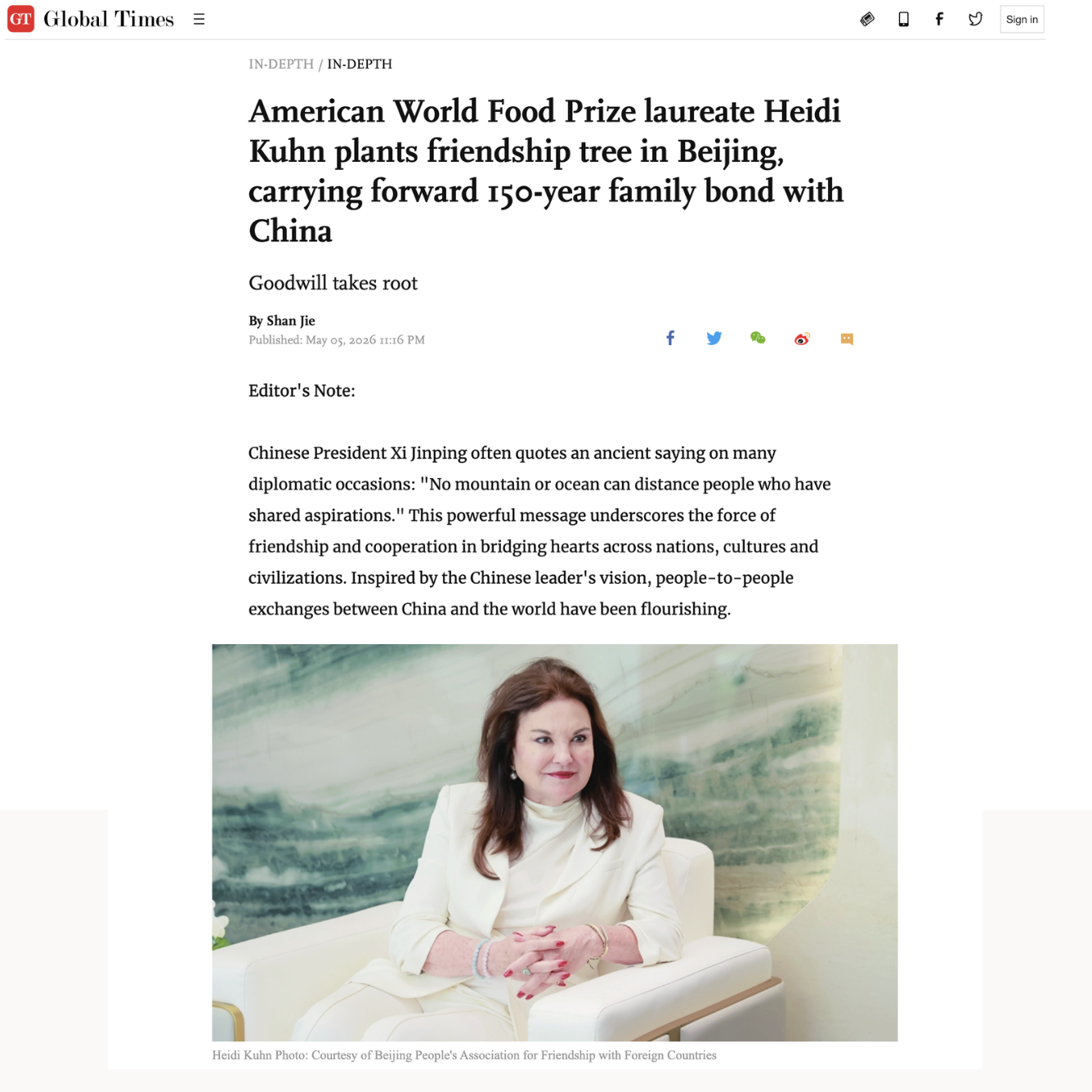
Global Times : May 5, 2026
-
![]()
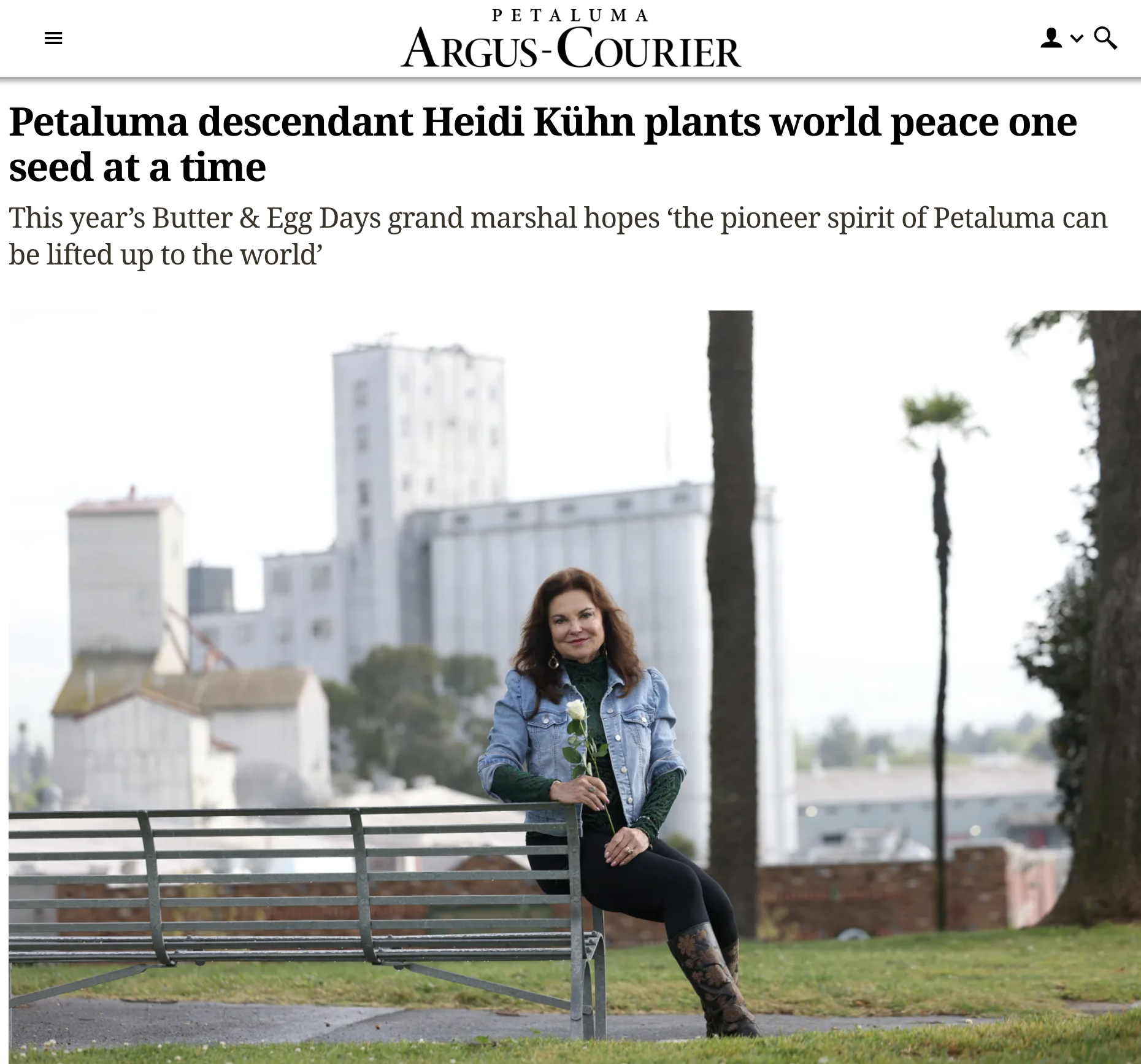
Argus-Courier : April 6, 2026
-
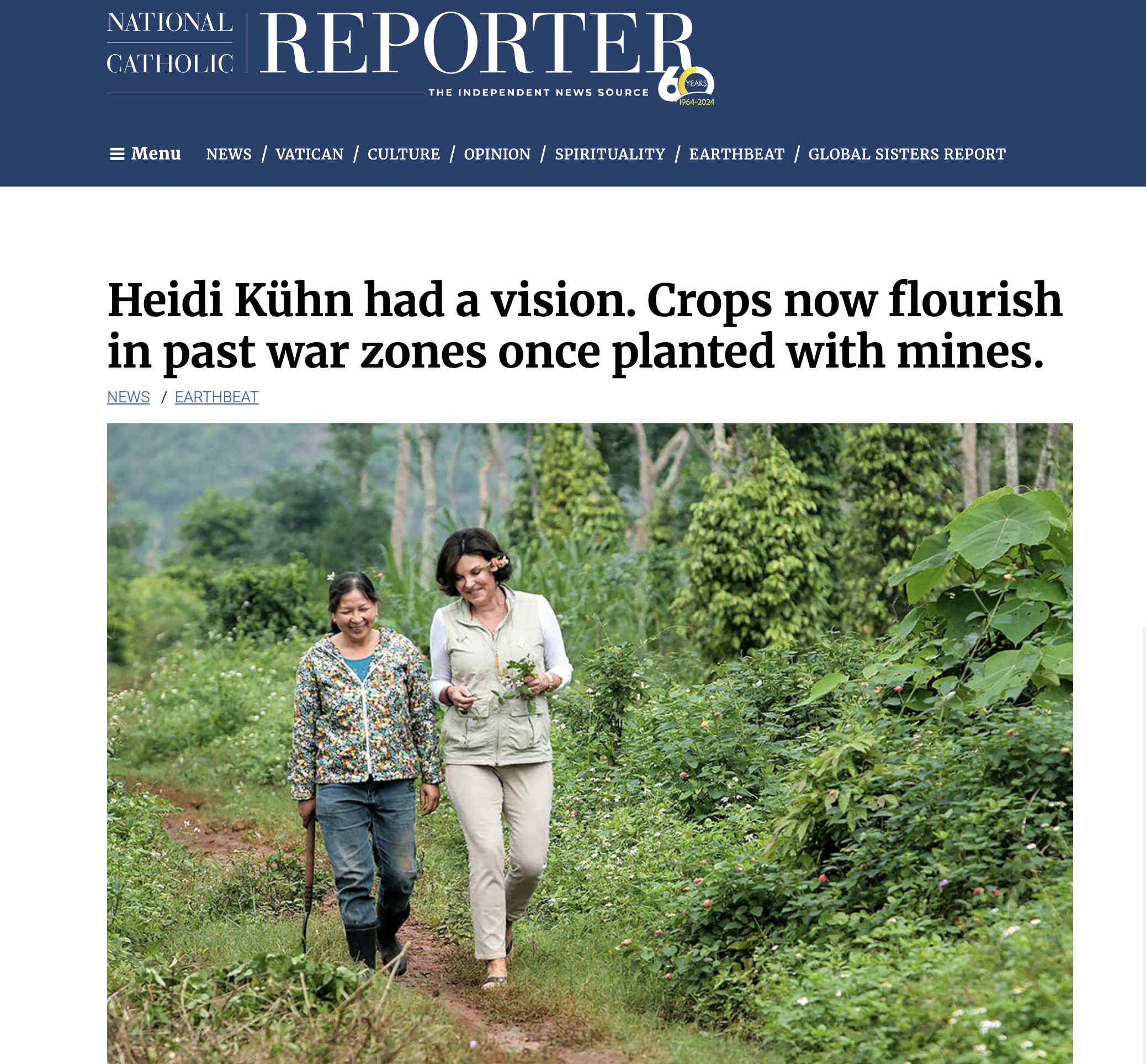
![Heidi Kuhn National Catholic Reporter]()
National Catholic Reporter : February 2026
-
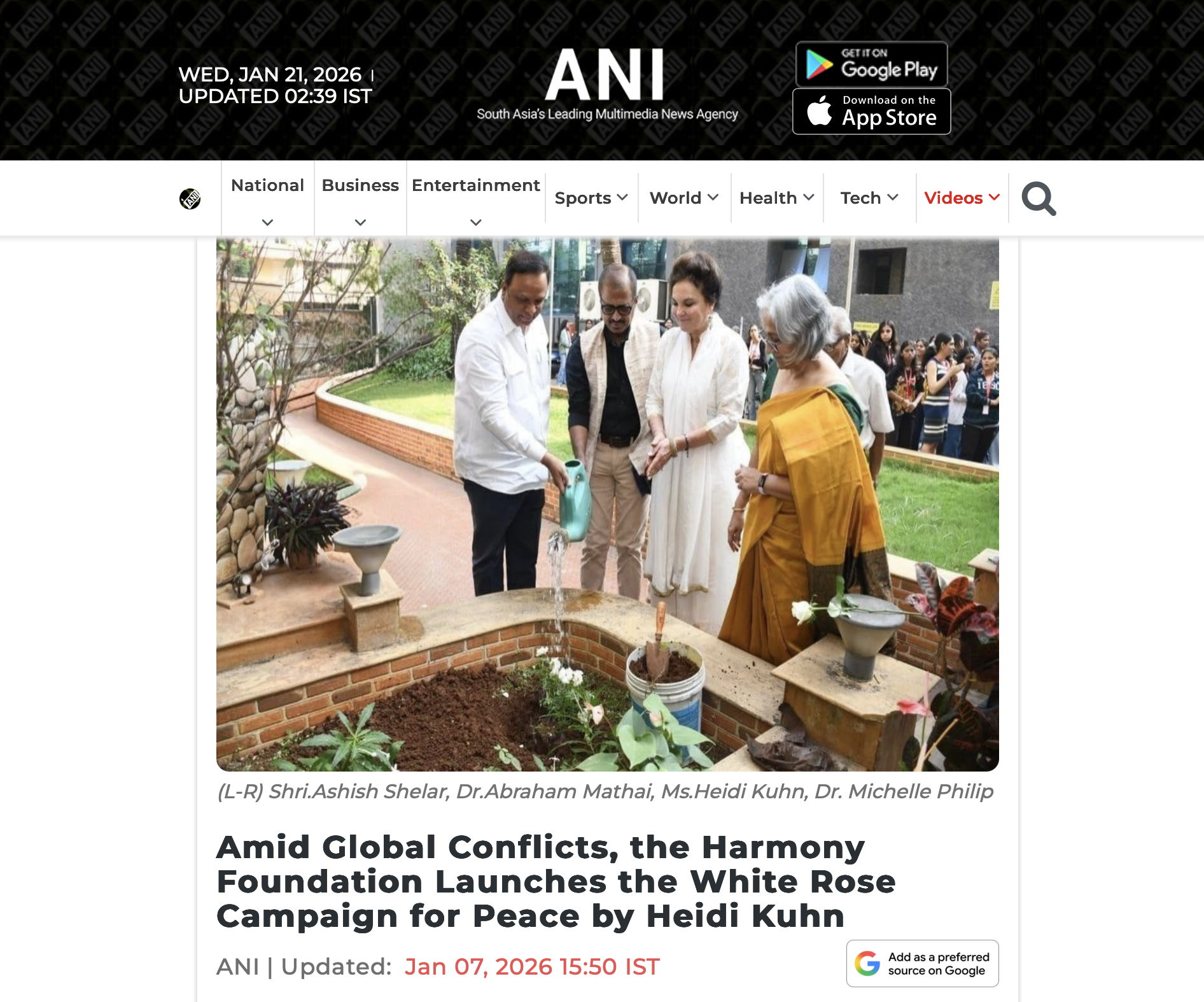
![ANI - Heidi Kuhn South Asia News Agency]()
ANI - South Asia News Agency : January 6, 2026
-
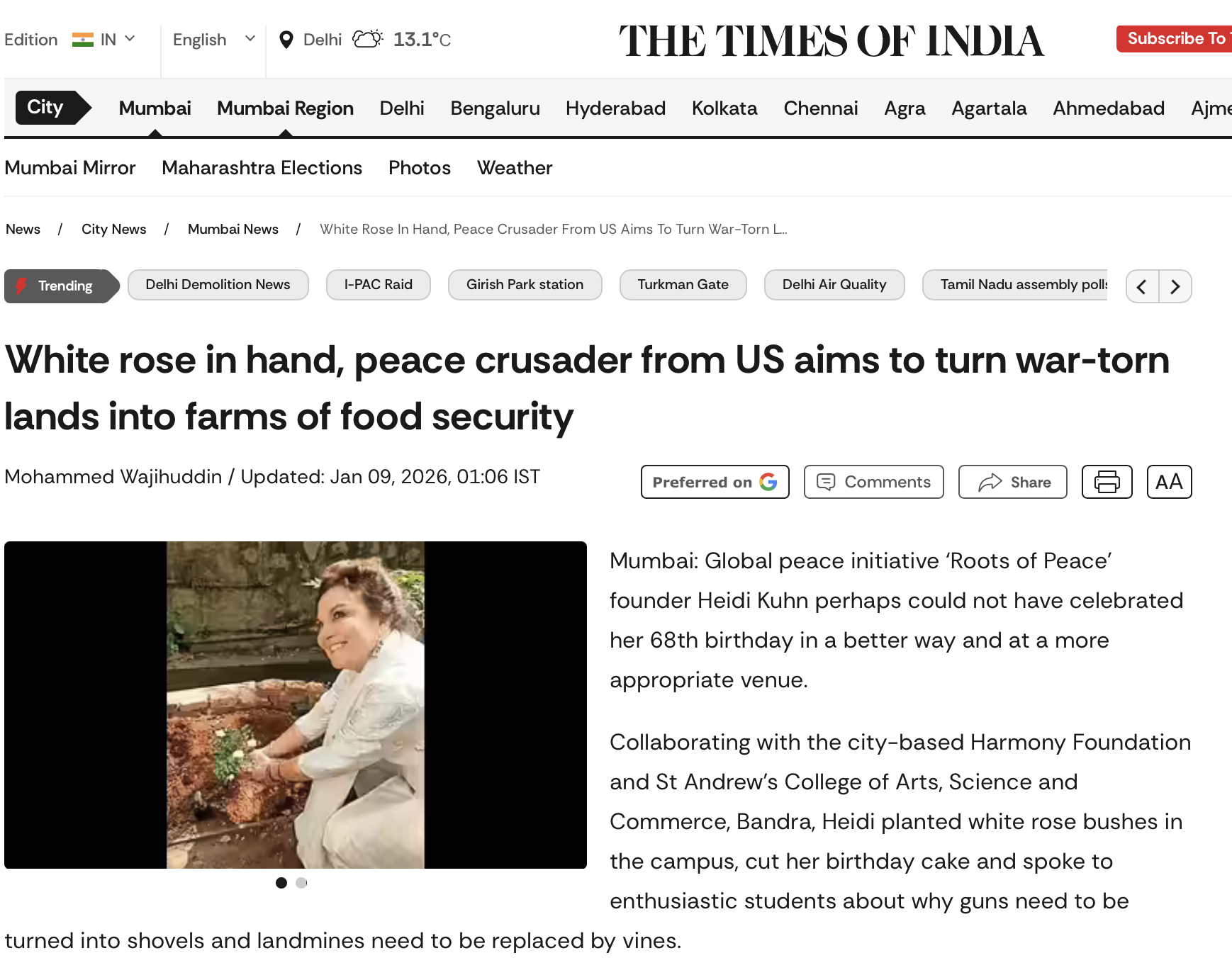
![Heidi Kuhn The Times of India]()
The Times of India : January 2026
-
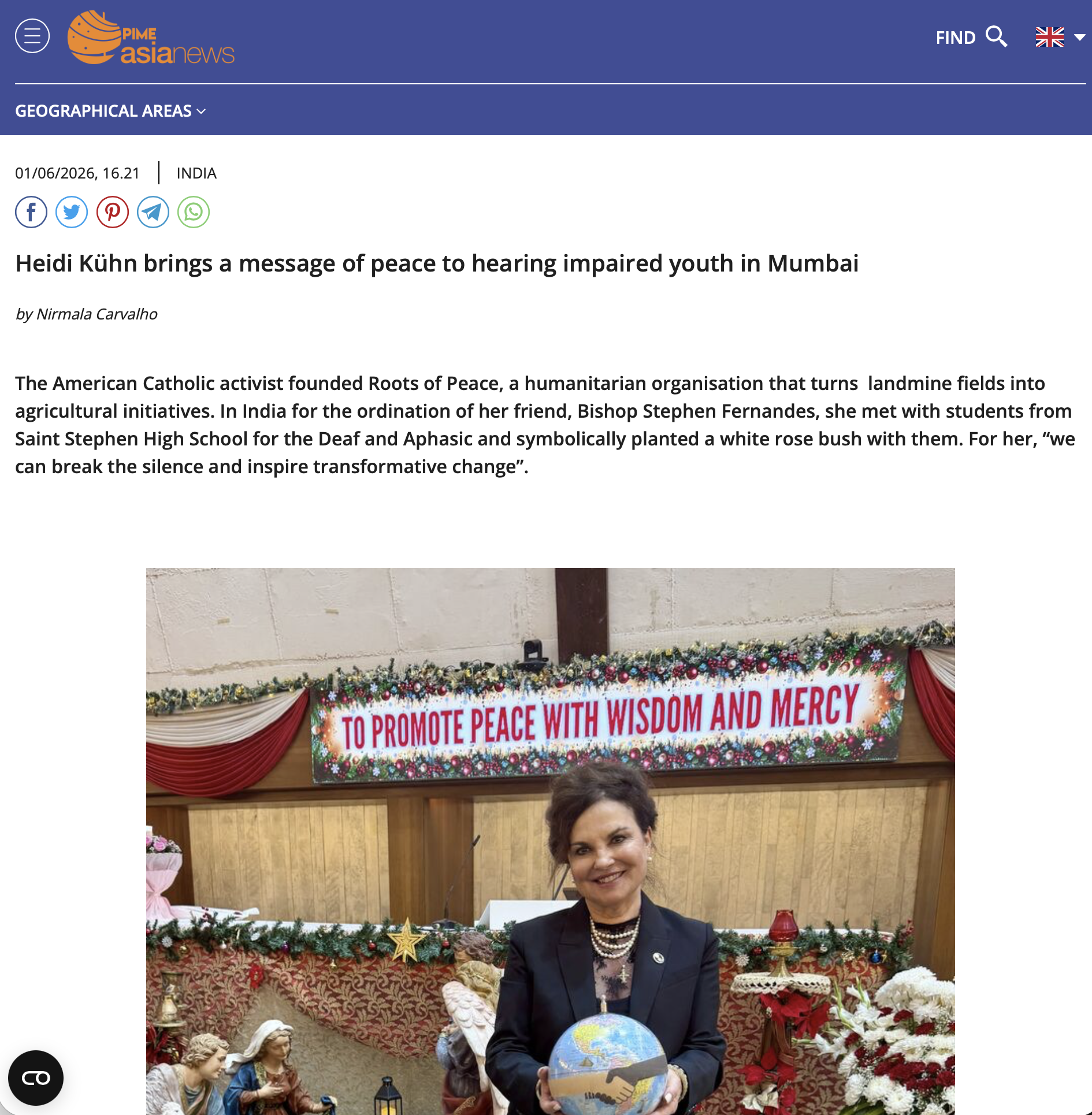
![Heidi Kuhn Pime Asian News]()
Pime Asian News : January 2026
What is a
Global Garden?
it begins where human hands meet the earth — planting a single seed in the conviction that
soil and soul are bound, & that tending both is the oldest path to peace.
A Global Garden is not defined by its size. It begins wherever a human hand meets the earth with intention — a window box catching morning light, a neighborhood plot reclaiming a forgotten corner of a city square, a shared field where a community once torn apart chooses to grow something together, and a former minefield transformed into a vineyard—turning Mines to Vines. What unites these acts across every scale and every culture is not acreage, but meaning: the quiet, radical declaration that this place matters, that these people matter, and that the future is worth tending.
When a community plants a garden in a visible, shared space — and tends it together — something remarkable happens beyond the harvest. Neighbors who have stopped speaking find reason to meet. Children reclaim streets they once feared. The care that begins in one small plot spreads, almost without explanation, outward: a window box appears next door, a wall gets painted, a long-neglected corner is suddenly swept clean. Care, it turns out, is contagious. And a garden is among the most powerful ways human beings have ever found to signal to themselves and to one another: we are still here, and this Earth is ours to tend.
This is why PAX AGRICULTURA calls not only communities in conflict zones, but every person — in every place — to plant. The movement asks nothing more complicated than this: wherever you are, grow something to share. Because to plant a garden is not merely an agricultural act. It is a social act, a spiritual act, a political act. It is a return to our common humanity — a language spoken before nations, before borders, before the divisions that pull us apart. Every civilization that has ever flourished has grown food together. Every culture that has endured has known that the soil and the soul are bound.
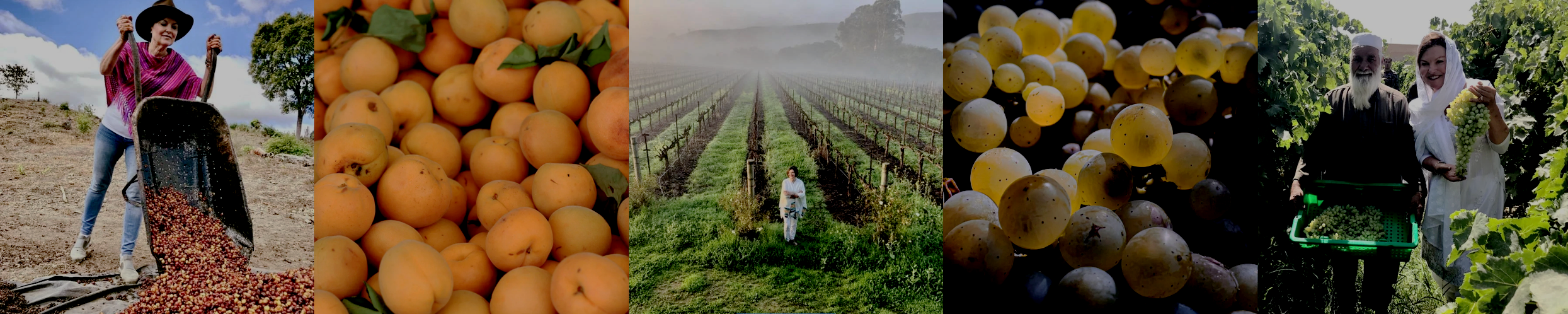
Since 1997,
Supporting Food Security
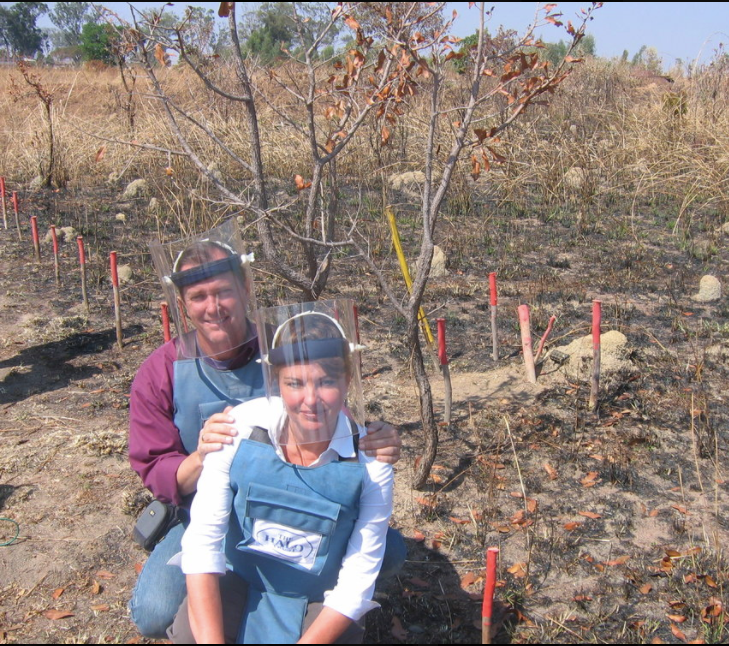
Transforming “Mines to Vines” —turning minefields into vineyards and orchards in Afghanistan, Vietnam and worldwide.

Growing Peace from the Ground Up

World Food Prize Laureate
For over 25 years, Heidi has walked through fields scarred by landmines—literal and metaphorical—and helped transform them into vineyards, orchards, and farmland that nourish families and rebuild communities.
Now she invites the world to join her in planting white roses everywhere—living symbols of our shared longing for peace.
UC Berkeley Chancellor, Richard K. Lyons
U.C. Berkeley
Kühn Initiative for
Post Conflict Development Studies
The Kühn Initiative supports academic research and outreach programming that focuses on the following areas of priority:
Developing detailed knowledge of agriculture in post-conflict zones
Supporting research on economic development in post-conflict societies
The study of demilitarization and development
Promoting peace through economic stability and prosperity
These efforts are interdisciplinary, connecting fields such as agricultural science, natural resource management, international development, political science, conflict studies, and area studies, with an emphasis on academic study that meets practical, real-world needs of farmers, activists, charitable foundations, and international aid organizations in relevant areas.
Peace begins with a seed
Her work highlights resilience, global partnership, and the power of turning “seeds of terror into seeds of hope,” inspiring communities and leaders worldwide to invest in peace through agriculture.
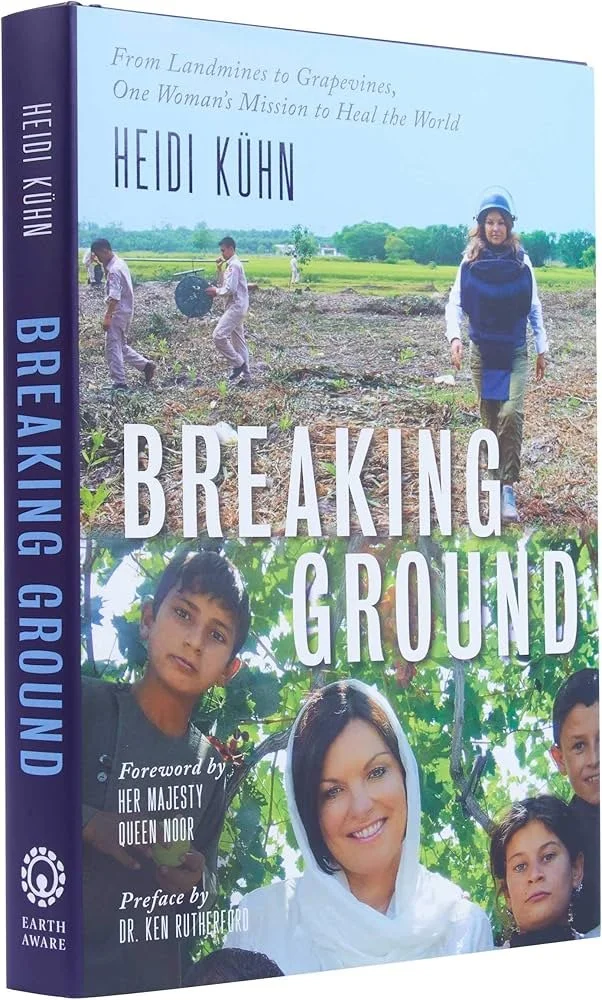
Dig into her legacy of peace
Discover the powerful story of hope, resilience, and transformation
in Heidi’s memoir, revealing how nurturing one seed can change the world.
AWARDS
-

World Food Prize, 2023
The World Food Prize honors individuals for improving global food security and agricultural innovation.
-

Gandhi Global Family Award, 2019
The Gandhi Global Family Award recognizes individuals promoting peace, nonviolence, and global harmony.
-

Mother Theresa Award, 2023
The Mother Teresa Award honors individuals dedicated to peace, compassion, and humanitarian service.
-

SKOLL Award for Social Entrepreneurship
The Skoll Award for Social Entrepreneurship recognizes innovators driving large-scale social change.